Views: 0 Author: Site Editor Publish Time: 2026-08-07 Origin: Site


Joint stiffness can make ordinary activities such as climbing stairs, bending an elbow, or getting moving on a cold morning feel more difficult. A joint heat patch provides localized warmth without requiring a plugged-in appliance, reheated towel, or hot-water container. Its main benefits are temporary comfort, easier movement, relaxed surrounding muscles, and convenient heat delivery during everyday activities. Understanding these advantages—and the limits of heat therapy—helps users decide when a patch is appropriate and how to use it responsibly.
A joint heat patch warms the skin and superficial tissues around the application area. This local rise in temperature encourages blood vessels near the surface to widen, increasing circulation in the warmed region. Heat can also make tight muscles and connective tissues feel more pliable, which may reduce the sensation of stiffness. These effects are especially useful when discomfort is associated with inactivity, muscle tension, cold conditions, or a long-term musculoskeletal problem rather than a new inflammatory injury.
Warmth may also influence how pain signals are experienced. Temperature, pressure, and pain messages travel through the nervous system at the same time, and a comfortable warming sensation can temporarily reduce attention to aching or tightness. This does not mean that a joint heat patch repairs cartilage, cures arthritis, or corrects the underlying cause of pain. It is better understood as a supportive comfort tool that may make sitting, walking, stretching, or completing routine tasks more manageable.
Another benefit is the gradual, continuous nature of the warmth. Air-activated products generate heat when iron powder inside the heating layer reacts with oxygen, removing the need for batteries or electrical power. Meilan’s Heat Therapy Patches use this air-activated heating principle and are designed for localized applications on different body areas. A sealed patch can therefore be stored until needed and opened immediately before use, although its instructions and stated temperature range must always be checked.
For people who feel stiff after sitting at a desk, resting for several hours, or waking in the morning, gentle warmth can make the transition into movement more comfortable. The practical goal is not to force a painful joint through a larger range of motion. Instead, users can apply warmth, wait until the area feels relaxed, and then begin with controlled movement. Any exercise should remain within a comfortable range, because heat can make a joint feel temporarily better without eliminating an underlying injury.
Conventional heating pads can work well at home, but they normally keep the user close to an electrical outlet and may restrict movement. Warm towels and hot-water bottles gradually cool and can be difficult to secure around a knee or elbow. By contrast, Joint Heat Patches are designed to conform to areas such as the knee, elbow, wrist, or shoulder while delivering localized warmth. Meilan’s category page states that its joint-focused products use flexible, lightweight designs and can provide extended heat, although the exact duration depends on the selected product.
Hands-free use is one of the clearest practical benefits. Once a suitable joint heat patch is positioned correctly, the user does not need to hold it in place throughout the warming period. This can be helpful while reading, working at a desk, traveling as a passenger, or performing light household activities. However, a patch should not be treated as sports protection or structural joint support unless the product is specifically designed and labeled for that purpose.
Targeted coverage can also reduce unnecessary heating of surrounding areas. A large heating pad may warm the entire thigh or arm even when discomfort is concentrated beside the kneecap or around the elbow. A shaped joint heat patch places the warming sections closer to the intended region, while openings and divided heating cells may help the material bend around a curved joint. Better conformity can improve comfort, but the patch should never be wrapped so tightly that it causes pressure, numbness, discoloration, or restricted circulation.
Portability makes heat easier to include in a consistent routine. Disposable patches can be carried in a work bag, travel case, or sports kit without a charger or microwave. This is useful for people whose stiffness changes with weather, travel, or working conditions. The convenience may encourage more predictable use, but users still need to follow the labeled duration rather than leaving a joint heat patch on simply because it remains attached.
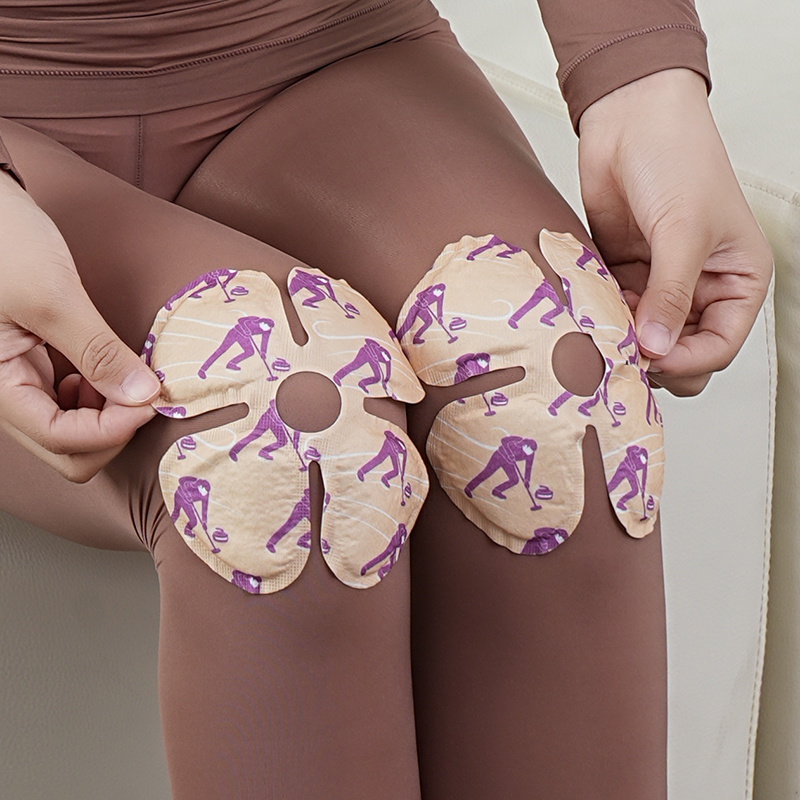
The knee is a common application area because stiffness can affect standing, walking, climbing stairs, and bending. A shaped Knee Relief Heat Patch can place warmth around the joint while leaving space over the center of the kneecap. The linked Meilan design uses a flower-like shape intended to follow joint curves, and its product page lists multiple heat-duration and temperature configurations. Product-specific instructions remain essential because these specifications can vary between versions.
A knee heat patch may be helpful before gentle mobility work when the knee feels stiff from inactivity. Runners and other active users may also consider warmth for general muscle tightness or post-activity stiffness, but it should not be used to conceal sharp pain or continue training through an injury. A newly twisted knee that is swollen, red, or hot needs a different response, and heat may worsen early inflammation. Persistent pain, instability, locking, or difficulty bearing weight warrants professional assessment rather than repeated self-treatment.
Elbows, wrists, and shoulders present different fitting challenges. An elbow heating pad or patch must bend repeatedly without lifting at the edges, while a wrist design should avoid restricting circulation or hand movement. For these areas, smaller divided heating cells or flexible adhesive sections can follow the joint more effectively than a rigid rectangular pad. Users should test comfortable placement while the joint is relaxed before relying on the patch during movement.

Older adults with long-term stiffness may value a warm patch for arthritis-related comfort at home, especially during cold mornings or winter weather. Reduced activity, lower environmental temperatures, and prolonged sitting can make a stiff joint feel harder to move initially. A joint heat patch may provide temporary warmth before dressing, walking indoors, or beginning clinician-approved exercises. Seniors with reduced skin sensitivity, diabetes-related neuropathy, circulation problems, or difficulty checking the application area should seek medical advice before using heat.
Fit should be evaluated before heat duration or packaging claims. A knee product needs enough coverage around the painful area without folding behind the joint, while an elbow product must remain comfortable during bending. Adhesive patches offer a low-profile option beneath loose clothing, but they may be unsuitable for sensitive skin. Wrap-style designs can be repositioned more easily, although excessive tension can create pressure and reduce comfort.
A Self-Heating Knee Wrap combines an air-activated heating section with a stretchable bandage for targeted placement. The listed Meilan design measures 303 × 149 mm, uses an iron-powder heating layer, and has a stated duration of four to six hours. Because a wrap holds heat close to the body, it should be secured firmly enough to stay in position but never tightened to the point of tingling, numbness, or skin color changes.
Heating layout matters as much as overall size. A Targeted Joint Heat Patch uses four divided warming sections around an open center, allowing the product to follow a curved knee or elbow. Its product page lists several available temperature and duration configurations rather than one universal setting. Buyers and users should therefore verify the exact version, label, intended contact method, and maximum wearing time instead of assuming that every joint heat patch performs identically.
Comfort depends on the complete construction, including the outer fabric, breathable film, adhesive, heating-cell distribution, and contact surface. A patch that is too stiff may lift during movement, while one with poor coverage may warm the wrong area. Higher temperature is not automatically more effective, because excessive heat increases the risk of irritation or burns. A moderate, stable warming sensation that remains within the labeled conditions is more appropriate than seeking intense heat.
Start by reading the package instructions before opening the sealed pouch, because exposure to air normally begins the heating reaction. Check whether the product should be placed directly on skin, over clothing, or inside a wrap; different constructions require different contact methods. The application area should be clean and dry, and users should avoid placing the patch over lotions, damaged skin, rashes, or wounds. Position the joint heat patch without wrinkles, then monitor how the warmth develops during the first part of use.
The sensation should remain comfortably warm rather than painfully hot. Remove the patch immediately if burning, strong redness, itching, numbness, dizziness, or unusual discomfort develops. Do not combine it with another heating device, tight compression garment, or topical warming product unless the instructions specifically allow that combination. Users should also avoid sleeping with an active patch unless the manufacturer expressly labels the product for overnight use, because sleep reduces the ability to notice excessive heat.
Heat is generally more suitable for ongoing stiffness and muscle tension than for a recent injury with active swelling. Do not apply a joint heat patch to an area that is already hot, red, markedly swollen, bleeding, infected, or newly injured. Extra caution is necessary for people with impaired sensation, poor circulation, certain vascular conditions, or an inability to remove the product independently. Medical guidance is appropriate when health conditions or medications may change the skin’s response to temperature.
Finally, judge the result by function and comfort rather than heat intensity. A useful patch may make gentle movement, sitting, or household activity feel easier, but relief should not be interpreted as proof that an injury has healed. Stop using the product if symptoms worsen or repeatedly return without a clear reason. Severe, unexplained, or persistent joint pain needs clinical evaluation, particularly when accompanied by fever, deformity, weakness, instability, or loss of normal movement.
A joint heat patch can provide targeted warmth, temporary relief from stiffness, relaxed surrounding muscles, and convenient hands-free support at home or while traveling. The most suitable design depends on the joint, coverage, attachment method, temperature, and labeled wearing time. Heat should not be used over a fresh, swollen, red, or hot injury, and persistent pain requires professional assessment. Jiangsu Meilan Medical Devices Co., Ltd. is a manufacturer with documented production lines and quality-control processes for self-heating products, offering several joint-specific constructions for different placement needs.
A: It provides localized, portable warmth that may relax surrounding muscles, reduce the sensation of stiffness, and make gentle movement or everyday activities feel more comfortable.
A: No. A heat patch may temporarily ease arthritis-related stiffness or discomfort, but it does not cure arthritis, reverse joint damage, or replace prescribed treatment.
A: It may help general post-activity tightness, but it should not be applied to a newly injured, swollen, red, or unusually hot knee or elbow.
A: Follow the exact product label. Wearing times vary by construction and heat level, and extending use beyond the stated duration can increase skin-irritation or burn risks.
A: Many can, but seniors with reduced sensation, fragile skin, neuropathy, poor circulation, or difficulty monitoring the area should consult a healthcare professional first.


