Views: 366 Author: Site Editor Publish Time: 2026-08-18 Origin: Site


Heat patches are an increasingly popular product used to alleviate discomfort from muscle pain, cramps, and other ailments. These patches provide a convenient, non-invasive, and effective way to apply heat to a localized area, offering relief without the need for an external power source. They have become an essential item in many households for their ease of use and effectiveness in treating common conditions such as back pain, menstrual cramps, and even seasonal muscle stiffness.
However, one common observation made by users is that after applying a heat patch for a period of time, it often becomes hard and stiff. This natural progression can leave users wondering why this happens and whether it indicates any malfunction. This article aims to provide a clear explanation of the chemistry behind heat patches and explore why they harden after use.
Understanding the science behind heat patches will not only answer the question of why they harden but also enhance your appreciation of how these products work and why they are designed the way they are.
Before delving into the chemical process, it is important to understand the basic structure of a heat patch and how it functions. Heat patches are designed to generate heat through an exothermic chemical reaction when exposed to air. The purpose of these patches is to provide pain relief through consistent, controlled heat for a specified period, usually ranging from 8 to 12 hours.
A heat patch is a flexible, adhesive patch that contains various ingredients that, when exposed to air, react chemically to generate heat. The patch adheres to the skin, allowing the heat to be localized in a specific area. This localized heat application helps in alleviating pain and discomfort in muscles, joints, and even during menstruation.
The patch itself is lightweight, portable, and easy to use, making it an ideal solution for people who experience pain due to physical activity, muscle strains, or menstrual discomfort. Heat patches typically activate once they come into contact with air, initiating the heating process.
The materials used in heat patches are critical to their function. They include:
Iron powder: The most important ingredient responsible for heat production. Iron powder reacts with oxygen in the air to produce heat.
Salt: Added to accelerate the reaction and to help regulate the heat produced.
Activated charcoal: This ingredient aids in regulating the flow of oxygen and helps maintain an even distribution of heat.
Vermiculite: This mineral material retains heat, allowing the patch to deliver warmth for a longer duration.
Together, these ingredients work in tandem to produce heat that helps relieve discomfort. The patch is sealed in a flexible pouch that is designed to be adhered to the skin, where the heat is needed most.
Component | Role | Effect on Patch |
Iron Powder | Main ingredient for oxidation (heat) | Generates heat by reacting with oxygen. |
Salt | Speeds up the chemical reaction | Helps maintain a steady heat output for longer. |
Activated Charcoal | Regulates oxygen flow to maintain the reaction | Ensures even heat distribution. |
Vermiculite | Retains and distributes heat | Helps prolong the heat release and makes the patch flexible. |
To understand why heat patches get hard after use, it’s important to first look at the chemistry behind the heat generation process. The reaction that powers heat patches is an oxidation process, which is a type of exothermic reaction that produces heat as a byproduct.
The primary reaction in a heat patch is the oxidation of iron powder. When iron powder is exposed to oxygen in the air, it undergoes a chemical reaction that produces heat and iron oxide, also known as rust. This reaction is exothermic, meaning it releases heat.
The oxidation process:
3Fe+4O2→2Fe2O3+Heat
In simple terms, iron (Fe) combines with oxygen (O₂) to form iron oxide (Fe₂O₃), which is a rust-like substance. This reaction generates heat that is released into the patch and then transferred to the skin, providing warmth and relief.
Salt: Salt accelerates the oxidation reaction. It acts as a catalyst, speeding up the process and helping to maintain a consistent temperature for a longer period.
Activated Charcoal: Charcoal regulates the flow of oxygen into the reaction, ensuring that the heat production is consistent and stable throughout the patch’s active period.
Vermiculite: This ingredient helps to retain the heat generated by the chemical reaction. It allows the heat to be spread evenly across the patch and prolongs the duration of the heat release.
The combination of these ingredients ensures that the patch produces a steady and controlled amount of heat, providing effective pain relief over time.
Once the patch is exposed to air, the oxidation process begins almost immediately. As the reaction progresses, the temperature of the patch rises, reaching its peak at a designated temperature that is safe for use on the skin. Depending on the specific product, the patch will continue to produce heat for several hours, after which the reaction will slow down, and the patch will begin to cool.
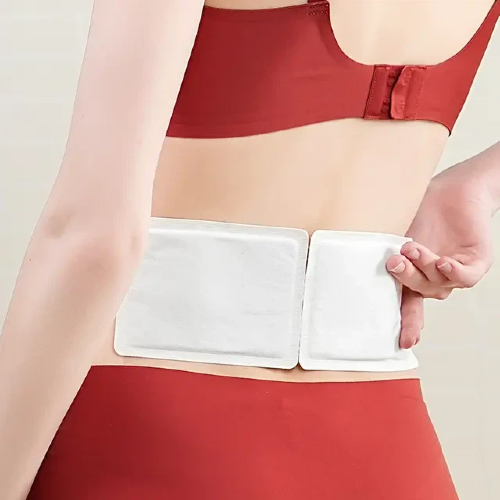
After a heat patch has been used for the duration of its heat-producing phase, it typically becomes hard. This phenomenon occurs due to several factors related to the cooling process and the chemical reaction itself.
As the oxidation process slows down and the iron powder has reacted with the available oxygen, the chemical reaction comes to an end. This results in the patch cooling down and hardening. Several factors contribute to this hardening:
The iron has oxidized completely: Once the iron powder in the patch has fully oxidized and transformed into iron oxide, the reaction can no longer produce heat. At this point, the patch cools and hardens as the heat generation process ends.
Moisture Evaporation: During the heating phase, moisture within the patch (and from external humidity) evaporates. As the patch cools, the loss of moisture contributes to the solidification of the components inside the patch, leading to its hardness.
Solidification of Components: As the temperature drops, the materials inside the patch, such as the iron oxide and vermiculite, become more rigid. The lack of heat and moisture causes these components to harden, resulting in the patch becoming stiff and unyielding.
The solidification of the patch occurs when the heat-producing reaction is complete. The materials that were once flexible and able to hold heat begin to lose their ability to stay pliable. This natural end to the reaction is responsible for the patch hardening as it cools down.
While the hardening of a heat patch after use may seem concerning, it is a natural part of the process. The hardening does not affect the patch's ability to provide relief during its active phase.
Once the chemical reaction has completed and the patch has cooled, its job is done. The purpose of the patch is to provide heat to the affected area, and once the reaction has finished, the patch no longer needs to remain soft or flexible. The hardening is simply a sign that the patch has completed its task and released the heat it was designed to produce.
Effectiveness: The effectiveness of a heat patch is determined by how well it delivers heat during its active phase. The hardening process occurs after this phase and does not affect the quality or the relief provided by the patch during its use.
No impact on relief: The relief experienced from using a heat patch comes from the heat generated during the active phase. Once the patch has cooled and hardened, the heat has already been released, and the patch has served its purpose.
The heat from a patch typically lasts between 8 and 12 hours, depending on the formulation and the size of the patch. The heat is most effective during the first few hours of use, gradually decreasing over time. Once the heat is no longer being generated, the patch will naturally cool and harden.
In conclusion, the hardening of heat patches after use is a natural result of the chemical reaction that generates heat. The oxidation of iron powder with oxygen produces heat, and once the reaction has run its course, the patch cools and hardens. This hardening process is not a sign of malfunction or reduced effectiveness. Instead, it indicates that the patch has completed its task, delivering the necessary heat for pain relief.
At Jiangsu Meilan Medical Devices Co., Ltd., we take pride in the science behind our heat patches and their ability to provide effective, targeted relief. Understanding the chemistry of heat patches can help you better appreciate how they work and the benefits they offer. We are committed to ensuring our products meet the highest standards of quality and safety. If you would like to learn more about our heat patches or explore how they can help with your specific needs, we encourage you to get in touch with us. Our team is always ready to assist with any questions or inquiries you may have.
Heat patches stop heating once the oxidation reaction between the iron and oxygen has been completed. At this point, the patch has released its stored heat, and the reaction comes to an end.
Yes, heat patches are completely safe even after they become hard. The hardening is a result of the chemical reaction reaching its end and does not indicate any malfunction or danger.
No, heat patches are designed for single use. Once they have hardened and the reaction is complete, they cannot be reactivated.
No, the hardness simply indicates that the heating process has ended. The heat that was generated during the patch's active phase provided the necessary relief, and the patch has completed its task.


